The Lucky Charm Is Not a Cultural Dictionary
Learn how lucky charm meaning in a casino story emerges from a character’s words, gestures, and relationships, without turning one keepsake into a cultural rule.
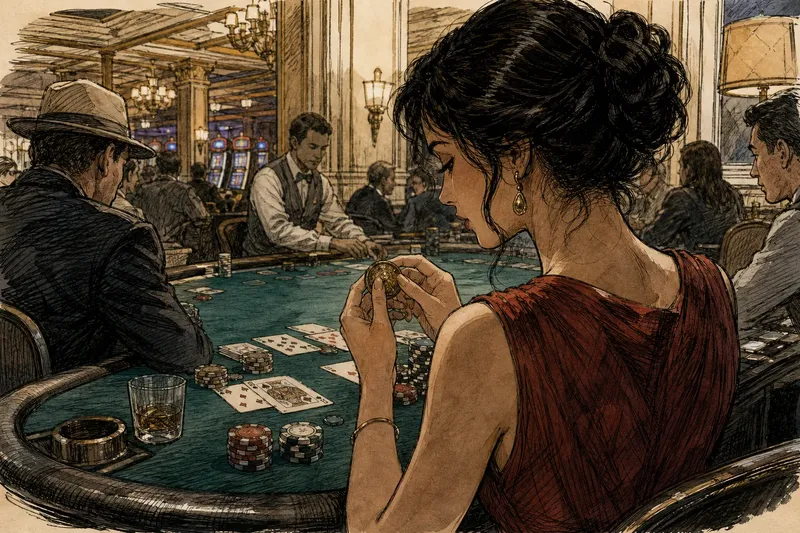
What does a lucky charm mean in a casino story? Lucky charm meaning depends on the owner and the scene: a token might signal hope, family memory, faith, humor, or simply a familiar habit. One object cannot tell you what an entire community believes.
To read the symbol carefully, separate the visible detail from your interpretation of the character and from any claim about a wider culture. The casino’s atmosphere can give the object new weight, but the character’s words, actions, and relationships determine what the story supports.
Start with the object
A charm is an object someone treats as personally or symbolically significant. A coin might be kept for luck, inherited from a relative, used as a reminder to stay calm, or carried because it fits in a pocket. Its appearance offers a clue, not a complete explanation.
Think of a charm like a key on a ring: its shape is visible, but its purpose depends on who uses it and what it opens. In a story, that purpose emerges through details such as where the object came from, when the character handles it, and what they say about it.
Read the casino scene
Notice when the charm enters the action. A character might touch it before making a decision, hide it from another player, lend it to a companion, or joke about carrying it. A recurring gesture can suggest comfort, anxiety, ritual, or attachment, but the surrounding dialogue helps distinguish among those possibilities.
The setting changes the emphasis without settling the meaning. At a gaming table, the charm may become associated with suspense or hope; in a family home, the same object may call attention to kinship or remembrance. The casino frames the moment, while the story supplies the personal history.
Also ask who describes the object. If a narrator calls a character’s keepsake “exotic,” that word reveals something about the narrator’s point of view, not necessarily about the object or its owner. An unfamiliar symbol need not be treated as a puzzle for outsiders.
Questions about charm meaning?
Does a charm always mean luck?
No. A story may encourage that association, but the charm could instead express affection, grief, identity, or routine. Look for the character’s own words and behavior before choosing a meaning.
Can color identify a culture?
Color associations vary among people and situations, so color alone cannot establish a cultural claim. The story needs to show why that color matters to this character or setting.
What if the story gives no explanation?
Describe what the object visibly does in the scene and leave its deeper meaning open. It may create atmosphere or suggest reassurance, but silence does not support a detailed cultural interpretation.
Can a charm change meaning?
Yes. A keepsake might become part of a character’s gaming routine while remaining tied to family memory. That development belongs to the character’s story; it does not establish a universal meaning.
Keep claims in proportion
A useful reading keeps three layers distinct: what the scene shows, what the character may feel, and what someone might claim about a community. For instance, the scene may show a pendant in a pocket. Repeatedly touching it could support an inference that it offers comfort, while a claim about the beliefs of everyone who shares the character’s heritage would require context the single scene does not provide.
Communities are not uniform. People who share a nationality, religion, language, or heritage can adopt, adapt, or reject practices associated with it. A fictional character’s attachment is evidence about that character, not a shortcut to a group portrait.
Check the story’s clues
- Origin: If the story says the object was inherited, consider a family connection; if it gives no origin, describe what is present instead of assuming a history.
- Language: If the character calls it lucky or protective, include that stated meaning; if they describe it differently, use their wording instead of imposing a label.
- Gesture: If the character handles it repeatedly at a particular moment, consider a ritual or comfort; if there is no repeated action, avoid claiming a routine.
- Relationship: If another character recognizes or questions it, examine how their views shape the scene; if nobody responds, do not invent a shared interpretation.
- Change: If the object’s role shifts as the plot develops, describe the change; if its role stays consistent, do not claim a transformation.
- Narration: If the narration contrasts the owner’s ordinary use with an observer’s surprise, discuss that contrast; if it does not, avoid assigning the contrast to the scene.
Follow one reading through
Imagine a fictional card player carries one brass button from a coat her grandfather wore. Before a hand, she rubs it; after losing, she puts it away and says it reminds her of him, not of luck. The starting details are one inherited button, a repeated gesture, and her stated explanation.
First, record the observable action: she rubs the button before play and puts it away afterward. Next, use her words to connect it to her grandfather rather than to a promise of winning. The resulting reading is that the button brings family memory into the game and gives her a familiar action during a tense moment. If she had never explained it, the safer reading would stop at the repeated gesture and leave its personal meaning uncertain. Neither version supports a claim about what brass buttons mean to a whole culture.
Choose precise wording
Match the strength of your claim to the evidence. “The character treats the token as reassuring” fits a calming gesture better than “the token symbolizes luck” if the story never mentions luck. “The scene connects the object to family memory” is more grounded than calling it a traditional symbol for a community without support.
For lucky charm meaning in a casino story, start with what the character says and does, then consider the setting and relationships. That order leaves room for several meanings at once while keeping a personal symbol distinct from a cultural claim.