How Casino Spaces Turned Gambling into Public Spectacle
Explore how casino spaces made gambling visible to wider audiences while rules and social codes continued to shape who could enter and take part.
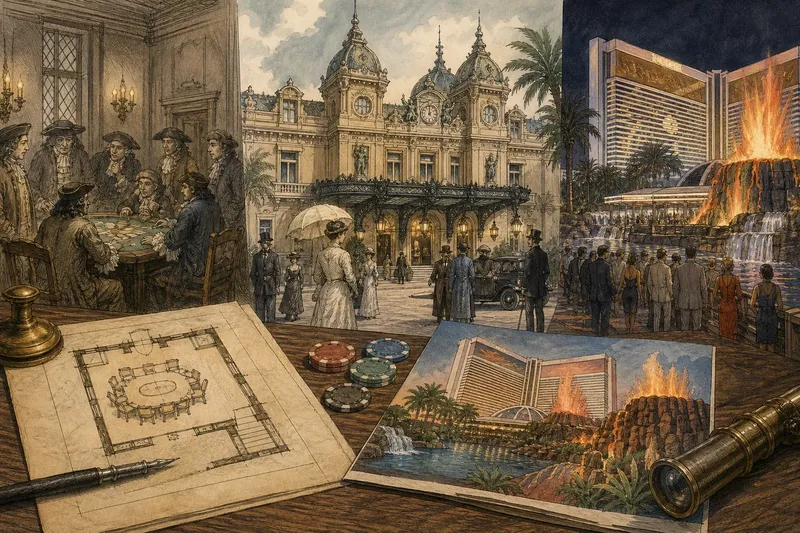
How did casino spaces and public spectacle make gambling visible to people who might never enter a gaming room? A Venetian gaming house, Monte Carlo’s resort setting, and Las Vegas’s themed complexes each presented gambling to an audience, but visibility did not mean equal access.
Rooms and access
Early modern gambling took place in private homes, clubs, and gaming houses. These settings offered different kinds of access. A private room might depend on an invitation or personal ties; a gaming house could receive a broader public while remaining shaped by local rules, reputation, and social convention.
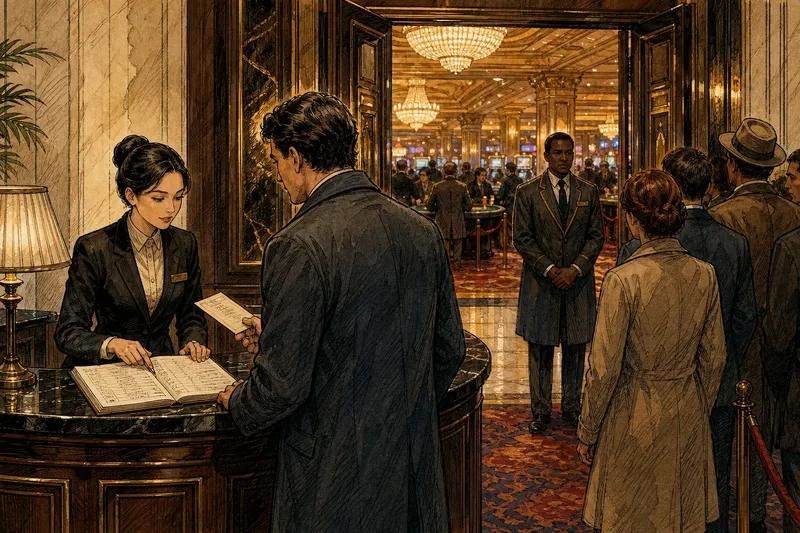
“Private” and “public” describe access more usefully than architectural form. A room could be visible from the street yet difficult to enter. A venue open to visitors might still reserve particular areas for people who met its rules or understood its customs.
Venice’s Ridotto is often discussed as an example of organized public gambling. Its history is commonly linked to the Republic’s efforts to regulate gaming during Carnival, but claims about its precise founding date and operation should be checked against reliable historical sources. The broader point is narrower: regulation and public visibility could coexist with distinctions in status and conduct.
Monte Carlo’s image
The Casino de Monte-Carlo opened in the nineteenth century as part of Monaco’s effort to attract visitors. Its architecture and public image associated gambling with travel, leisure, and elite sociability. The venue became legible as a destination, not merely a room where games took place.
That change did not erase barriers. Formal expectations and entry rules shaped the experience. A visitor might see the building, enter a public area, approach a gaming room, or take part in play; each represented a different degree of access. Promotion could invite attention without making every space available or welcoming to every visitor.
Las Vegas on display
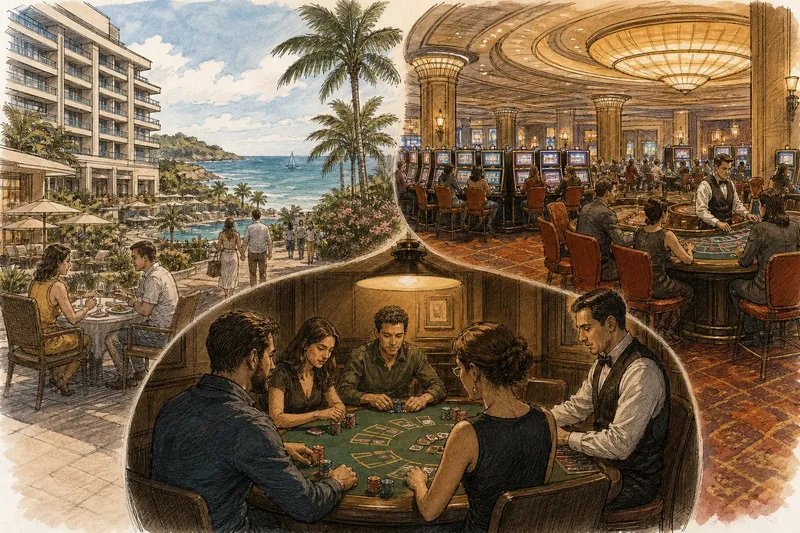
In twentieth-century Las Vegas, casinos appeared within larger entertainment complexes. Hotels, restaurants, performances, and themed interiors presented a visit as more than time on a gaming floor. The Flamingo is often treated as an early marker in the Strip’s resort development, while later venues expanded the resort model in different ways.
The Mirage, for example, is associated with a highly visible resort design that made the exterior and its attractions part of the appeal. For specific dates and details about individual venues, consult institutional histories or contemporary records rather than relying on a general comparison. The wider pattern is that some casinos presented the entire building as part of the show.
This resembles a closed cabinet beside a shop window: both contain objects of interest, but the window makes looking part of the experience and suggests an entrance. The analogy has limits. Casino visitors are not just spectators, and a visible doorway does not remove admission rules or social distinctions.
Display and boundaries
These examples do not establish a universal transition from private rooms to public venues. Different forms overlapped, and a resort could pair a welcoming lobby with quieter or more restricted rooms. What became more prominent in some settings was public display: buildings and publicity presented gambling alongside travel, dining, performance, and leisure.
The imagined visitor changed with the presentation. A private club could address members familiar with its social codes; a resort advertisement could address travelers and spectators who knew little about the gaming floor. A venue might invite broad attention while limiting participation through rules, custom, or a visitor’s sense of belonging.
How should casino evidence be read?
What counts as dated evidence?
Look for material that identifies a place and time, such as an archival record, contemporary guide, institutional history, or photograph with reliable context. Separate what the source directly shows from your interpretation of the space.
Did casinos become fully public?
No. Greater visibility in some settings did not remove rules or social codes. A venue could welcome onlookers while restricting entry to particular rooms or participation in games.
What can a photograph establish?
A photograph can show furnishings, signs, room layout, and people within its frame. By itself, it cannot establish how typical the scene was, who was excluded, or what visitors experienced outside the camera’s view.
How can different eras be compared?
Compare similar sources where possible, such as a dated floor plan with another floor plan, or one promotional image with another. Describe what those sources show without treating them as representative of every venue in either period.
A worked comparison
Say you have two invented classroom materials: a reproduction of a plan labeled “private gaming room, seventeenth century,” and a fictional Las Vegas resort brochure labeled “late twentieth century.” Record the dates and source types printed on them. The plan shows one bounded room and one entrance; the brochure shows a hotel, dining, entertainment, and gaming. From those visible details, you can say the plan presents a contained setting while the brochure frames gambling as part of a broader visit. You cannot use either item alone to establish how all gaming rooms or resorts operated.
Checking source limits
Pair evidence about physical space with material about how it was used or promoted. A floor plan can suggest routes but leave out atmosphere. An advertisement can show the image a venue wanted to project without revealing ordinary visitor experience. Rules, local histories, contemporary accounts, and architectural records can help fill gaps, though each has its own purpose and limits.
- If a source names a place and date, use it as a bounded example; if either is missing, seek corroborating material before making a dated claim.
- If a plan shows entrances and room divisions, describe those visible features; if it omits use or access rules, consult rules or accounts before inferring who could enter.
- If an advertisement highlights hotels or performances beside gambling, say it presents the venue as a broader destination; if it gives no evidence of visitor experience, do not treat it as a record of ordinary use.
- If a photograph includes identifiable signs or furnishings, describe what appears in the frame; if its date or context is uncertain, avoid using it to establish a specific historical change.
- If a source records entry rules, distinguish formal rules from actual practice; if practice is not documented, state that limitation rather than assuming uniform enforcement.
- If two sources differ in date, type, or purpose, compare only features they share; if they are not comparable, choose better-matched material or narrow the claim.
The history of casino spaces and public spectacle becomes clearer when visibility and access are treated separately. A building can invite the public to look while its rooms, rules, and social codes continue to shape participation. That distinction helps keep a striking facade from standing in for the whole social life inside.